
Imagine an ERP team is due to go live on Monday. A consultant discovers that the opening accounts payable balances still don’t reconcile with the old system. In the meeting, an executive has just told the client the project is on schedule. The consultant has to decide whether to raise the issue or go back and investigate alone until they’re sure. That choice can determine how much time the team has left to test and fix it.
Psychological safety is a team’s shared belief that people can ask questions, seek help, admit mistakes, and challenge assumptions without fear of embarrassment. Amy Edmondson studied 51 work teams at a manufacturing company and found an association between team psychological safety and learning behaviors such as asking questions and seeking feedback. Amy Edmondson’s 1999 study
What Google found in its own teams
Google’s Project Aristotle studied 180 teams inside the company, including 115 engineering project teams and 65 sales pods. Google reported five dynamics associated with team effectiveness, with psychological safety standing out in its data. I use the dynamics as questions for examining a team, since an ERP consultancy works with its own clients, contracts, and acceptance criteria. Google re:Work’s Project Aristotle guide
| Dynamic | Question before ERP go-live |
|---|---|
| Psychological safety | Can a consultant say the balances don’t reconcile before they know the cause? |
| Dependability | Will the person checking the balances deliver on time with the supporting evidence? |
| Structure and clarity | Who reconciles the balances, who verifies the result, and who approves go-live? |
| Meaning | What does each person value about the part of the work they own? |
| Impact | What will accurate data change for the people closing the books or paying suppliers? |
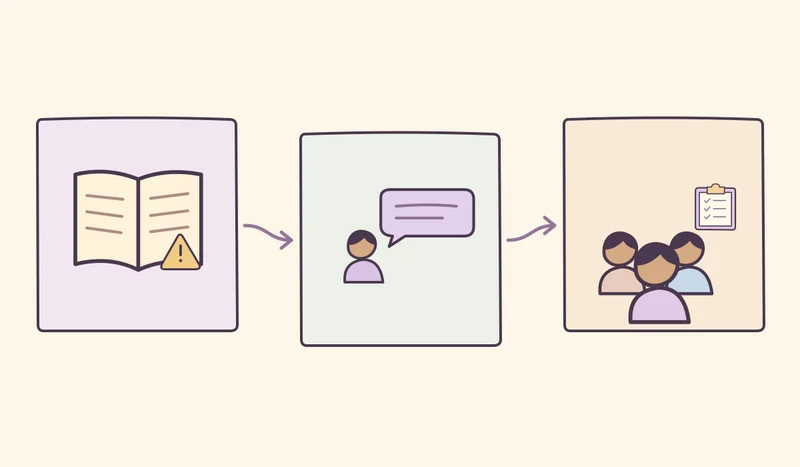
Look at how the lead responds in the moment
When someone raises the discrepancy, the lead could say, “Thanks for bringing this up now. Which balances have you checked? Can we see the reconciliation evidence, and when do we need a go-live decision?” That gives someone room to share uncertainty while making the next check and its owner clear. The team can still apply the agreed acceptance criteria and route the decision to the person authorized to make it.
Before the meeting ends, recap what evidence is missing, who will get it, and when the team will return to the issue. To see whether people feel able to speak up, ask about a recent event. “Was there anything you hesitated to raise? What made you say it or hold it back?” Listen for examples and see how concerns were followed up. More reports may mean the team can finally see problems that were going unspoken, so look at when issues surfaced and how people responded.