
“How do we know that’s the latest reservation figure?” the warehouse manager asks during an ERP demo. When a rush order comes in just before the shipping cutoff, seeing reserved stock and stock available to sell in separate fields answers only part of the question. The sales rep also needs to know whether the numbers on screen already reflect the reservation that just changed.
We’re back at the fictional distributor from the SPIN Selling episode. Last time, sales had to call the warehouse before confirming an order because the quantity on screen included stock already reserved. I’d use Robert Cialdini’s Influence: The Psychology of Persuasion, New and Expanded edition (2021), to decide what the buyer can check during the demo, from who can explain where a number came from to which customer references are worth discussing. The scenes and dialogue are examples written for this article. Book page from the Cialdini Institute
Have the person who knows the data walk the buyer through it
Cialdini uses authority to describe how people give more weight to advice from someone with credible expertise. For this demo, I’d bring in the person who configures the reservation rules and knows how the data moves. On the buyer’s side, the warehouse manager can confirm the reservation rules, and IT can check where the data comes from and when it updates. Authority from the Cialdini Institute
Warehouse manager “If someone in the warehouse just reserved stock for another order, when will sales see the new quantity?”
ERP specialist “Let’s save this reservation with a warehouse account, then open the sales screen with the account we set up for the rep. We can compare the timestamp on the reservation with when the new quantity shows up for sales.”
Buyer’s IT lead “Both screens are pulling from the same database here. We run a separate warehouse system. Can we also test what happens when its update is late near the shipping cutoff?”
ERP specialist “Yes. Let’s record what we see in this setup today. For the next test, your IT team can pick an example we have permission to use from your warehouse system. Then we can agree on what sales should see while the update is pending and when reps should hold off on confirming an order.”
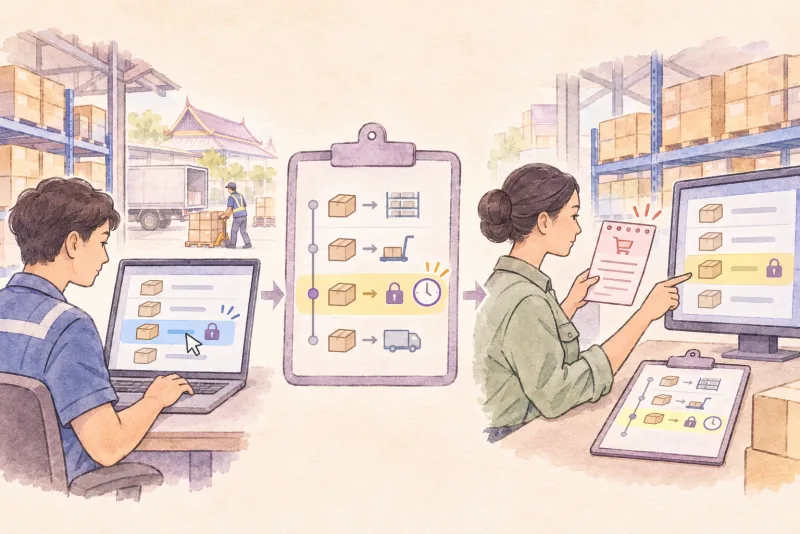
Run the three tests the buyer agreed to
Before starting, have the warehouse manager and sales agree on the quantities they expect in each case. Use sample data or buyer-approved data with sensitive details removed. Let the buyer’s team run the tests with accounts that match their roles and record the expected and observed results side by side. If they differ, capture the point where they diverge so the team can check it later.
| Test case | Evidence to check | Who checks it and what the result covers |
|---|---|---|
| There’s enough stock available to fill a rush order | Compare the starting inventory and reservation records with the quantity available to sell in the sales account | Sales confirms how many units it could promise. The warehouse manager checks the quantity against the agreed rules for the test records. |
| Stock is on hand but reserved for another order | Compare the reservation and its timestamp with stock available to sell before and after the change. Check what reservation details the sales account can access. | The warehouse manager checks that reserved stock is excluded from the available quantity. IT checks the source and update timing in the test setup. |
| Sales wants to reassign reserved stock to another order | Have a rep try the change and check that it requires approval. After the warehouse manager approves it, open the history to see who changed what and when. | The warehouse manager and IT check permissions and history for the roles and steps exercised in this run. |
The demo shows how the tested configuration behaves with the selected data. To find out how quickly quantities update while several reps take orders at once, or when the warehouse integration falls behind, run a test that resembles actual operations. For anything still unmeasured, agree on an owner and a date. Ask the buyer how long a rep can wait before holding off on confirming a quantity to the customer.
Use customer references to decide what else to test
Social proof describes how people look to others in similar situations when they’re unsure. A distributor that also takes rush orders near cutoff and uses similar approval rules may help the buyer figure out what to ask next. Social proof from the Cialdini Institute
Before sharing a real example, I’d check the evidence for any facts or results I cite and confirm what the reference customer has approved for this audience. Company names, figures, screenshots, and introductions each need to be within that permission. If there’s no relevant case you can share, use the buyer’s question to plan a test together.
Say an approved reference used similar reservation rules but started with one warehouse and recorded reservations directly in the ERP. Its experience with approvals could help the buyer ask better questions about permissions. Update timing for this buyer still needs to be measured with their own warehouse integration.
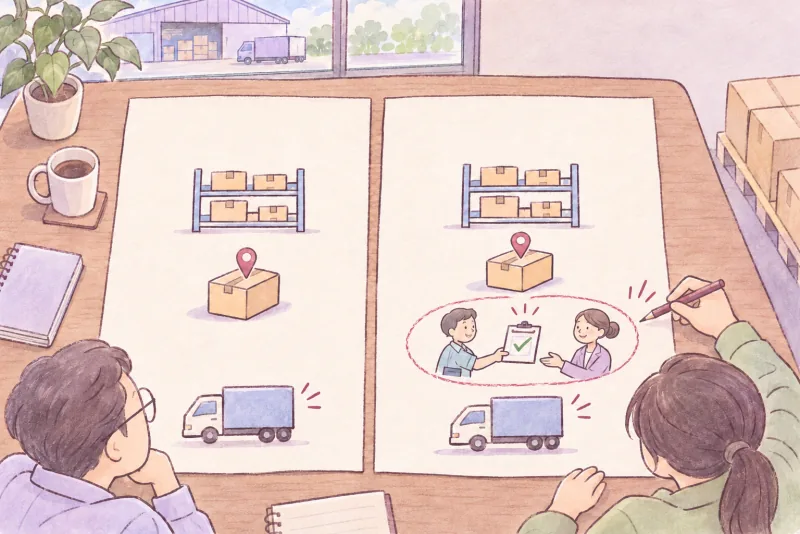
Give the buyer a record they can use after the demo
Reciprocity is the tendency to want to return a favor. Here I’d share a record the buyer can review independently, with the tests they ran, what they saw, and what’s still open. They can take it to the person who approves the project or use it to ask another vendor the same questions. They can keep it regardless of whether they schedule another meeting or decide to buy. Reciprocity from the Cialdini Institute
A checklist the buyer can copy
Claim we want to check / decision that depends on it
Test case / data and accounts used / result we expect
Observed result / evidence we can revisit / reviewer on our side
Conditions this result covers / what still needs to be verified
Approved customer reference / evidence / where its operations match or differ from ours
Follow-up test / pass criteria / owner / date
Suppose all three tests go as expected. The warehouse manager may still ask, “If we go live near cutoff and orders get held up, who decides when we go back to the old process?” The JOLT Effect picks up there. The team has seen the system behave as expected in the demo, and it still has to decide how much risk it can take when it goes live.