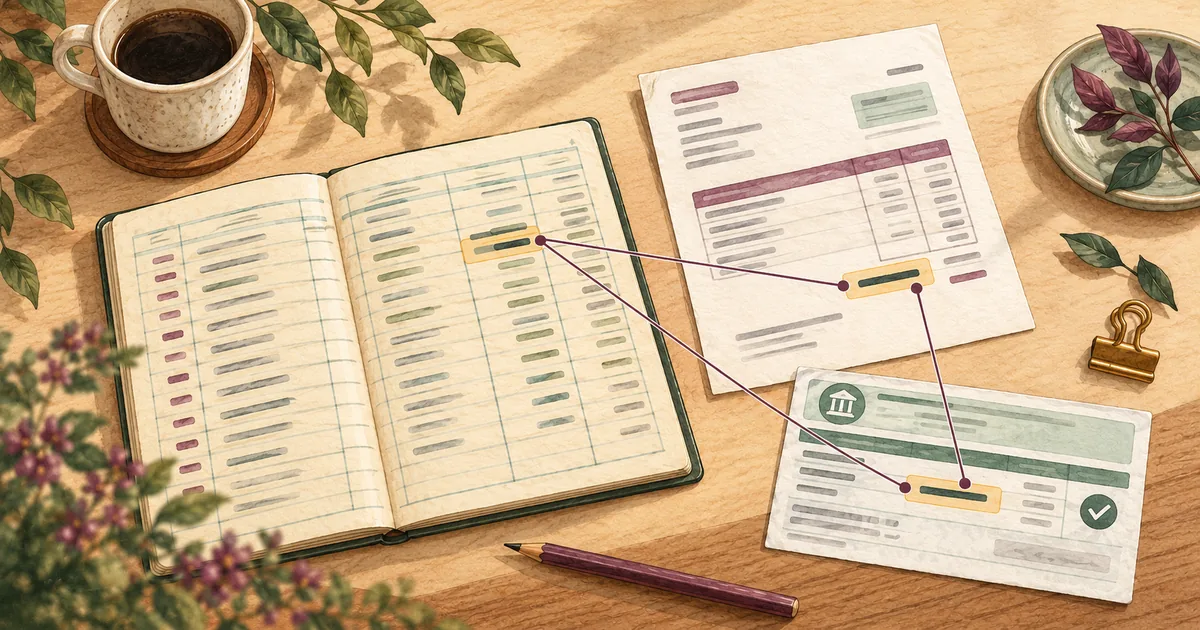

The opening image illustrates payment tracing; it is not a real tax document or transaction.
Short answer: Ministerial Regulation No. 402 was published in the Royal Gazette on October 9, 2026, and sets a 1% withholding tax rate for specified income paid from January 1, 2026, through December 31, 2027, provided the payer remits the tax by the method in Section 3 quindecim through the prescribed e-Withholding Tax system. It does not make every bank transfer eligible for 1% withholding. It also does not change VAT or the recipient’s final income tax.
When accounting sees “withholding reduced to 1%,” its first question should not be “Where do we change the rate in the system?” It should ask: What type of income is this, who receives it, and how is it paid? If those three questions are unanswered, changing 3% to 1% on a payment record can leave the ledger, bank evidence, and data received by the Revenue Department out of step.
Which payments qualify for 1%?
Regulation 402 does not reduce the rate for every type of payment. Section 40(2) fees and commissions, and Section 40(3) payments specifically for goodwill, copyright, or other rights, are covered when paid to a company or juristic partnership. Rent under Section 40(5)(a); professional fees and contract work under Sections 40(6) and (7); and some Section 40(8) income, such as work-for-hire, advertising, and other services, each have recipient conditions and exceptions. Read each provision before setting a rate. See pages 1–2 of the regulation
Exceptions named in the regulation include rent for ships used in international freight transport, hotel services, restaurant services including catering, and life insurance premiums. Some provisions also exclude payments to foundations or associations. The word “service” on an invoice alone therefore cannot settle the rate. See pages 1–2 of the regulation
Another condition is the remittance channel. An ordinary transfer, online tax filing, or an e-Tax Invoice does not prove the payment went through e-Withholding Tax under the regulation. The payer must check the bank service used to transmit the data and tax under Revenue Department rules. Revenue Department Director-General Notification No. 20, Clauses 2–4
What evidence should one payment lead us to?
Imagine a company making both ordinary transfers and e-Withholding Tax payments in the same month. I would not begin by changing its entire chart of accounts. I would pick one qualifying payment and trace it all the way from the payable document to the evidence issued by the bank.
| Document or step to check | Information to compare | If it differs, what should we revisit? |
|---|---|---|
| Invoice and payable entry | Recipient, income type, service amount, and separately stated VAT, if any | Was the income misclassified, or was the VAT-inclusive total used without checking the withholding base? |
| Payment instruction and bank channel | Payment date, amount transferred, selected rate, and confirmation that the e-Withholding Tax service was used | Was this an ordinary transfer or an actual tax-remittance service? |
| Electronic evidence from the bank | Payer, payee subject to withholding, income type, tax withheld, and reference number | Were the counterparty details, income code, or amount sent to the bank wrong? |
| Ledger and reconciliation | Payable cleared, bank outflow, tax withheld, and supporting reference | Was a different rate recorded than on the payment, or does an item remain unreconciled? |
The minimum information the payer sends to the bank, and the contents of the bank’s evidence, are specified in Revenue Department Director-General Notification No. 20, Clauses 4 and 5. The same notification treats the bank’s electronic evidence as proof of withholding and exempts the payer from issuing a Form 50 bis withholding certificate for qualifying payments. The bank must remit the tax and data to the Revenue Department within four business days after receiving them from the payer. Clauses 5 and 6
For anyone designing an accounting system, the same reference number should lead back to the source of the amount. If we store only the net transfer and omit the income type, payment channel, and bank evidence, accountants must search across systems when a counterparty questions the tax amount. The aim is to make the amount traceable; it does not prescribe the same screen design for every ERP.
What should an Odoo or ERP user check?
I would begin with two payment examples the business actually uses: one paid through e-Withholding Tax and a similar payment made by ordinary transfer. Then I would test whether the system keeps their rates and evidence distinct. Do not make 1% the default for an entire expense category just because some payments in it qualify.
When reviewing Odoo or another ERP, have the accountant identify the recipient, income type, payment date, and channel before approving the rate. Compare the payable document with the bank instruction, attach the bank reference number to the payment, and reconcile the outflow, tax withheld, and bank evidence in the same accounting period. The way data connects may differ by version, module, and bank. This article does not claim that Odoo can immediately connect to every bank’s e-Withholding Tax service.
If the system cannot yet send data automatically to the bank, start with a prepayment review and attach retrievable evidence after payment. Once you know the actual volume and file formats, decide what should be connected or migrated. Building for every legal exception before understanding real use often makes the accounting team rework data unnecessarily.
Published in October: what about payments from earlier in the year?
The Royal Gazette publication date was October 9, 2026, but the regulation covers income paid from January 1, 2026, through December 31, 2027. Regulation 402, pages 1 and 3. Search earlier e-Withholding Tax payments and separate those that qualify, those that do not, and those for which the evidence is insufficient to decide.
Do not assume the system will automatically refund any tax difference retroactively. Corrections to submitted information or tax follow different procedures depending on the error. Director-General Notification No. 20, Clause 7 and the Revenue Department FAQ describe correction and refund channels in certain cases. For an older payment that may have been over-withheld, the accountant should compare the documents with the bank and ask the Revenue Department about that payment’s facts before adjusting the books.
Questions accountants often have to answer
Can we withhold 1% just because we used a banking app?
No. Using an app or making an online transfer is not enough. The income must be among the types specified by the regulation, and the payer must remit tax by the e-Withholding Tax method it references. Regulation 402. Confirm which service the bank used for that payment.
Does an e-Tax Invoice mean e-Withholding Tax was used?
Do not treat them as the same thing. The Revenue Department describes an e-Tax Invoice as an invoice in electronic data form. The 1% provision here depends on the income type and the legally specified bank-based withholding remittance method. An electronic invoice alone does not establish how withholding tax was remitted.
Who issues withholding evidence for a qualifying payment?
Under Revenue Department Director-General Notification No. 20, Clause 5, the bank issues electronic tax-payment evidence to both payer and recipient. It serves as withholding evidence, and the payer is exempt from issuing a Form 50 bis certificate for qualifying payments.
Does changing from 3% to 1% reduce the recipient’s tax?
The 1% rate is an advance withholding at the time of payment when the regulation applies. It does not reduce the recipient’s final income tax rate or VAT. The effect on tax payable when filing depends on that recipient’s tax base and circumstances. Regulation 402
This article explains the rules as of October 18, 2026, to help review accounting steps. It is not a tax ruling for a specific transaction. For contracts with multiple income types, recipients with different legal status, or past payments already withheld, the accountant should check the regulation and actual records before changing a rate.